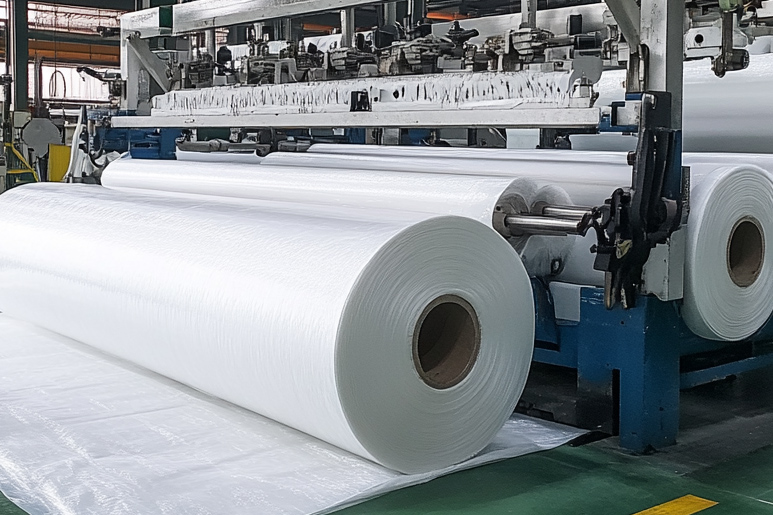

1. Core Requirements & Equipment Configuration for the Medical Sector
Medical applications, such as surgical gowns, isolation gowns, sterilization wrap, and disposable bedding, impose the most stringent performance requirements on nonwovens.
High Barrier Properties & Strength: Equipment must produce fabric with uniform grammage and high strength in both machine and cross directions. This relies on a highly stable extruder screw system and a precise spinning system to ensure consistent PP filament denier, forming a dense and robust web.
Comfort & Safety: Medical products must balance protection with breathability. Advanced multi-beam technology (e.g., dual or more beams) enables the production of multi-layer composite structures, such as SMS (Spunbond-Meltblown-Spunbond). Here, the meltblown layer provides excellent bacterial barrier, while the spunbond layers offer strength and softness. Furthermore, adjustable thermal calender rolls with specific patterns and pressure can optimize surface softness and hand feel, reducing patient discomfort.
Cleanliness & Certification: Production lines require oil-free or low-oil lubrication design and efficient online filtration systems to minimize contamination. Crucially, equipment manufacturers must deeply understand GMP (Good Manufacturing Practice) and relevant medical product certification requirements, incorporating targeted design features regarding material selection (e.g., stainless steel), enclosure, and ease of cleaning.
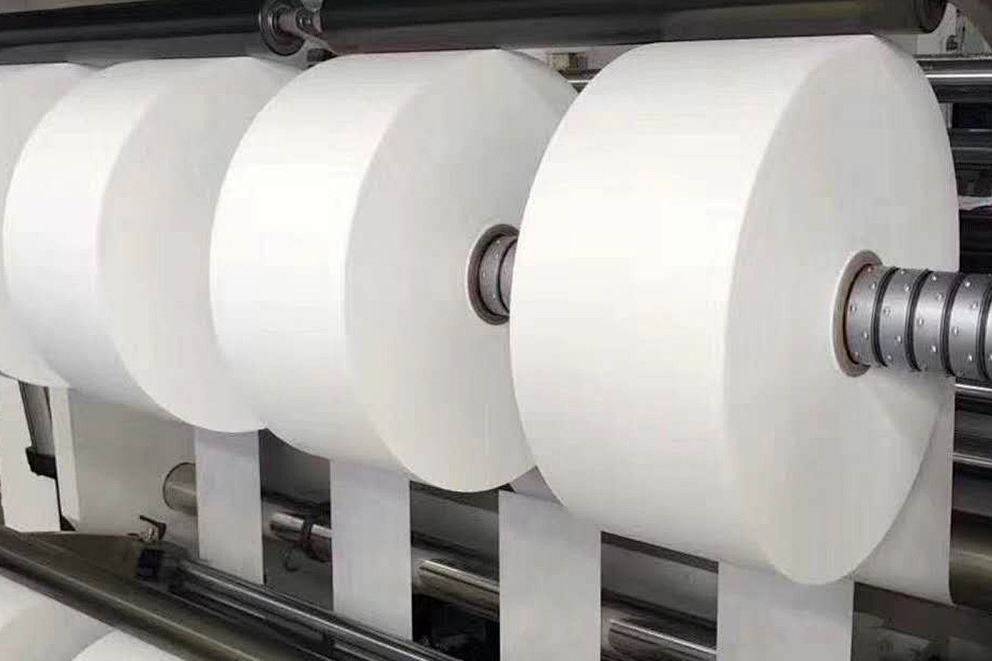
2. Core Requirements & Equipment Configuration for the Hygiene Sector
Hygiene products, including baby diapers, feminine care products, and adult incontinence items, represent the largest global market for PP spunbond fabric. Core demands are high speed, high output, cost-effectiveness, and ultimate softness.
Superior Productivity & Efficiency: The demand for top sheets and back sheets is enormous. Thus, line speed is critical, with modern high-speed lines exceeding 600 meters per minute. This necessitates a high-output spinning system, ultra-wide working widths (often over 3.2 meters), and exceptionally reliable high-speed thermal calendering and winding systems.
Ultimate Softness & Skin-friendliness: Consumers directly demand a soft touch. This is achieved through finer denier fiber production technology (e.g., more precise spinnerets) and special finishing processes. The ability to add hydrophilic agents online or offline, enabling rapid fluid acquisition, is essential for top sheets.
Flexible Product Changeovers: To accommodate different product lines, equipment must quickly switch between various grammages (e.g., 12 to 30 gsm), colors, and properties (e.g., hydrophilic or hydrophobic). Modular design and advanced Distributed Control Systems (DCS) are fundamental to achieving this flexibility.
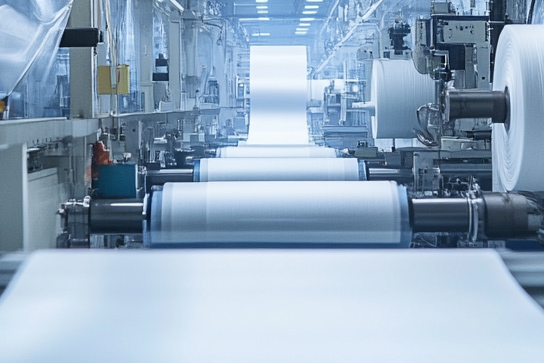
3. Core Requirements & Equipment Configuration for the Agricultural Sector
Agricultural nonwovens, such as weed control fabric, crop cover, mulch mats, and seedling bags, serve outdoor and long-term use environments, with performance priorities distinctly different from the previous sectors.
Superior Durability & Anti-Aging: This is the paramount requirement. Equipment must handle PP raw materials blended with high concentrations of anti-UV (Ultraviolet) masterbatch. The extruder and screw design must ensure complete melting and dispersion of additives without degradation. The produced fabric must possess excellent tear and burst resistance.
Controlled Light Transmission, Breathability & Water Permeability: Depending on crop needs, fabrics require specific shading rates and breathability. This is primarily achieved by adjusting grammage, fiber fineness, and the pattern of embossing rolls. Equipment must provide adjustable parameters for these processes.
Cost-Effectiveness & Environmental Suitability: Agriculture is cost-sensitive and conditions are variable. Equipment configuration, while ensuring core functionalities, prioritizes operational stability, energy savings, and ease of maintenance. The fabrics produced are often heavier (above 40 gsm), with a relatively simple but extremely robust structure.